
Remodeled Homes
Every project on this page was underwritten the way an investor underwrites one: what it costs to buy, what it actually costs to fix, what it realistically resells for, and what happens if the market turns while you are holding it. That analysis is the product. The renovation is just what follows from it.
What makes a plan like that executable is the bench behind it. Over the years we have built our own team — licensed general contractors, lenders, landscapers, inspectors and architects — people we have worked with across project after project and can put on a job in days rather than weeks. That matters more than it sounds like it should. Carrying cost comes directly out of the return, so a schedule that holds is worth more than a slightly cheaper bid from someone you have never used. It is also why a partner who brings me a deal is not also inheriting the problem of assembling a crew around it.
Below, ordered by how far each resale moved above what we paid for it. Resale prices run from $730,000 to $2.3 million across three counties and four years — a stretch that included both the sharpest rate shock in a decade and the recovery that followed. The outcomes were not uniform and were not supposed to be: some sold well above asking, some below it, and the difference had far more to do with when and where each one came to market than with how well it was renovated. That is the same analysis I run for a client selling a home they have lived in for twenty years.
The projects
Listed at $698,000, cut to $499,000, and still sitting after 59 days on market when we bought it at $431,000. That discount — not the renovation — is where most of this return was created. It went back on the market and into contract in seven days.
View before & after photos

The opposite of Cornelius: we paid 23% over asking to win it, because Cambrian resale is reliable enough to underwrite that. Relisted at $1,998,950 — just under a round number, so it reaches every buyer searching below $2M — and let competition set the final figure at $2,301,000 eight days later.
View before & after photos

Bought $100,000 under asking, then listed at $1,550,000 and closed at $1,495,000. Union City is a thinner market than Cambrian and the opening price tested the top of the range rather than the middle of it. The market disagreed and the number moved. Adjusting early costs less than defending a price for a quarter.
View before & after photos

Relisted in September 2022, weeks after mortgage rates crossed 6% and buyer demand fell off a cliff. Fifteen days to contract at 94% of asking. In a repricing market speed is the variable that matters most — every week a listing sits, the market re-anchors it lower.
View before & after photos
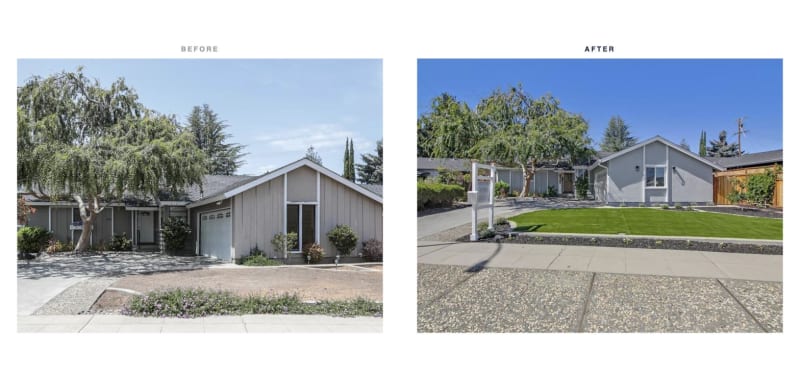
Listed on December 3rd and in contract by the 12th — inside the window most sellers are told to avoid. December thins the buyer pool, but it thins competing inventory at the same time. Which effect dominates depends on the price band, and here it favored the seller.
View before & after photos
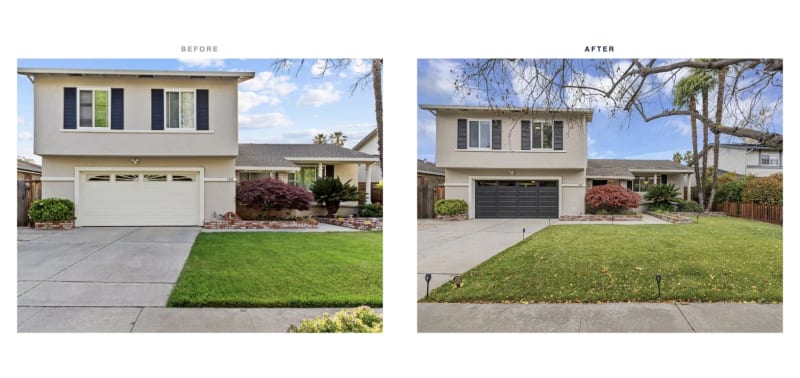
The hardest one in the group and the most instructive. Brought to market in January 2023, into the sharpest rate-driven demand drop in a decade. A project underwritten in one market had to be sold into another. It still cleared its acquisition price by $225,000 — which is the entire test of whether the underwriting was disciplined to begin with.
View before & after photos
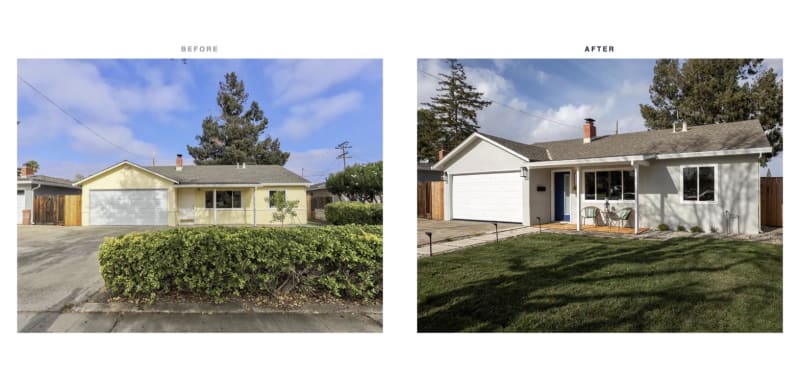
The thinnest margin in the group, and worth showing for that reason. The work was structural rather than cosmetic — opening the main living space so kitchen, dining and living read as one room. That is the category of improvement that changes which comparable sales a home gets measured against.
View before & after photos

Other ways we work
A different instrument from everything above, and shown here deliberately. This one was bought to hold, not to turn — which is why the honest way to read it is 4.7% a year rather than 20.8% total. Set that against a renovation project returning a similar figure in five months and you can see why the two strategies answer different questions. Where it does match the rest: five days to contract at 10.4% over asking, in a price band that normally moves slowly.
Renovated for the sale, then brought to market. The number that matters is not the 2.1% over asking — it is the seven days. Across 24 comparable Gilroy listings this year, same size range and same kind of lot, the median took 36 days to find a buyer. Six sat past 100 days. Nine either never sold or are still on the market. Condition and pricing are what separate a seven-day sale from a listing that spends a season collecting price reductions.
Coming soon
Cupertino is the tightest submarket we work in — school-district demand keeps the buyer pool deep even when rates move against it, which changes what a renovation budget can justify.
Cambrian Park again, where we have the most repetition and the most reliable read on what finished product the market pays for at each price point.
What this is actually useful for
Renovating and reselling houses is a useful discipline for one reason: you cannot argue with the result. The market either pays for a decision or it does not, and you find out within a few weeks. Those same decisions — what to improve, what to leave alone, what to ask, when to come to market, how to read an offer — are the ones every seller and every investor is making too.
Before you spend money on improvements, it is worth knowing which ones your price band actually pays for — and which ones you will not get back. Send me your address and I will run the comparable sales, the competing inventory and the pricing history for your specific segment.
Send me a property and I will work through acquisition price, renovation assumptions, holding costs, exit pricing and the realistic margin — including the cases where the numbers say the deal is not worth doing. That answer is worth as much as the other one.
Acquisition prices, list prices, sale prices and dates are from MLSListings. “Over acquisition” compares the resale price to the purchase price and is stated before renovation, financing, carrying and selling costs. “To contract” is the number of days from list date to accepted offer, not to close of escrow. Photographs are from the listings for each property.